
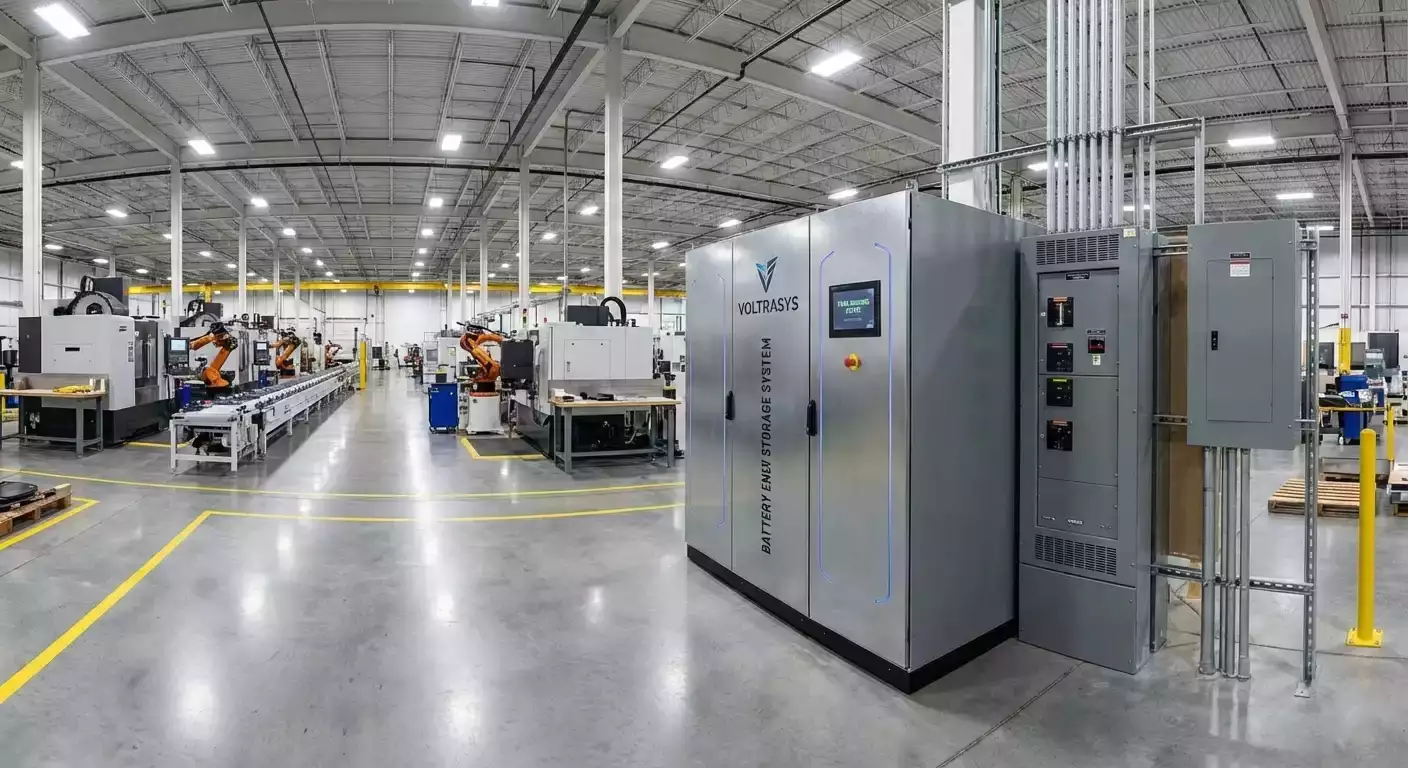
Custom Peak Shaving & Load Shifting Solution
for System Integrators & Industrial Facilities
Reduce Energy Costs & Optimize Factory Loads
Cut electricity bills by 15-30% with intelligent battery storage and load management
- ✓ Minimize peak electricity charges
- ✓ Stabilize power demand during high-load periods
- ✓ Seamlessly integrate with existing infrastructure
Designed for:
- System integrators / EPC partners delivering energy optimization
- Factories with variable, high electricity demand
Why Peak Shaving & Load Shifting Matters
Time-of-use pricing can dramatically impact industrial operating costs
The Problem
- 💰 Peak tariffs cost 2-3× more than off-peak
- ⚡ High-load machinery increases demand charges
- 📊 Unmanaged loads trigger utility penalties
- 🏭 HVAC & production spikes cost thousands monthly
The Solution
- ✅ Store energy during off-peak periods
- ✅ Discharge batteries during peak hours
- ✅ Smooth overall energy consumption
- ✅ Reduce bills and avoid demand penalties
Typical savings: 15-30% reduction in peak electricity charges
Peak Shaving vs. Traditional Approach
Compare energy costs with and without peak shaving

❌ Without Peak Shaving
- High demand charges during peak hours
- Uncontrolled load spikes
- 2-3× electricity costs during daytime
- Utility penalty fees for excessive demand
✅ With Peak Shaving
- Reduced demand charges (15-30% savings)
- Smoothed, predictable load profile
- Battery discharge during expensive periods
- No penalty fees, optimized tariff usage
How Our Peak Shaving Solution Works
Intelligent battery storage optimizes your energy costs automatically

🔋
1. Battery Storage
50-100kWh modular LiFePO₄ batteries store energy during off-peak hours
🧠
2. Smart EMS
Monitors grid signals and factory load, automatically dispatches stored energy
☀️
3. Optional PV Integration
Excess solar energy charges batteries for peak use, maximizing savings
🔌
4. Grid Integration
Works with ATS and backup generators, ensures continuity during outages
Real-World Cost Savings Example
See how peak shaving reduces electricity costs
Medium Manufacturing Facility
Factory Profile:
- Peak demand: 100 kW
- Peak hours: 4 hours/day
- Peak tariff: $0.25/kWh
- Off-peak tariff: $0.08/kWh
With 100kWh Peak Shaving:
- Daily savings: ~$68
- Monthly savings: ~$2,040
- Annual savings: ~$24,480
- ROI: 2-3 years
For System Integrators & OEM Partners
Deliver measurable cost savings and enhanced reliability to your clients
🔧 Integrator Benefits
- Flexible, modular design for various loads
- OEM / white-label manufacturing options
- Integrates with most inverter and EMS platforms
- Grid compliance & industrial safety standards
💰 Client Value
- 15-30% reduction in peak charges
- Fast ROI (typically 2-4 years)
- Reduced demand penalties
- Predictable, optimized energy costs
Empowering integrators to deliver high-value energy optimization.
Technical Specifications
Complete system components for peak shaving optimization
| Component | Specification / Notes |
|---|---|
| Battery Modules | LiFePO₄, 50-100kWh, modular |
| Inverter / PCS | 10-100kW, load shifting compatible |
| EMS | Real-time load monitoring, peak shaving algorithms |
| Optional PV | Roof/ground-mounted, 200-500W panels |
| Optional ATS | Seamless backup integration |
| ROI Period | Typically 2-4 years (tariff dependent) |
Ideal Applications
Perfect for facilities with time-of-use tariffs and variable loads

🏭 Manufacturing Plants
Variable loads with high-power machinery

📦 Warehouses
HVAC and refrigeration loads

🏢 Commercial Buildings
Under TOU tariffs seeking optimization
Get Your Custom Peak Shaving System
Tailored solution for your factory or integration project
Free ROI analysis. Proposal within 48 hours.
Frequently Asked Questions
How much can a factory actually save with peak shaving?
Savings come mainly from demand charges rather than energy. For this configuration the working range is 15 to 30% off peak demand charges with payback in 2 to 4 years on EU and UK tariffs. The range is wide because it depends on load factor, tariff structure and how much of the peak is genuinely shiftable.
How is the discharge threshold set?
From your billing demand history. The EMS discharges when site load crosses a configurable kW threshold, holding the monthly peak at a target instead of chasing every spike. Set the threshold too aggressively and the battery cycles out early each month; too conservatively and you leave demand charges on the table.
Does it work alongside solar plus storage?
Yes, and the combination usually outperforms either system alone: PV surplus charges the battery, and the same battery shaves the evening peak once solar has dropped off. Running both through one EMS avoids the common failure mode of two systems competing to charge from the same limited surplus.
What happens when several high-load machines start at once?
Inrush is absorbed by the battery’s fast response and, where needed, by a discharge window sized for motor starting rather than average load. Sites with large compressors or welders should share a motor schedule with us at design stage: staggering starts is often cheaper than oversizing the inverter for a few seconds a day.
Does it need changes to the existing switchgear?
Usually a dedicated breaker and a tap into the main distribution board, without rewiring production circuits. Sites above roughly 1 MW of demand may need a transformer or CT review, and any grid-connected installation needs the local utility’s approval before commissioning. That paperwork is the usual source of delay.

Related solutions: Solar + Storage Hybrid Systems · Factory Backup Power · 50–100kWh Industrial BESS
